
What Is Marketing Strategy?
By Elaine McKnight | February 27, 2026
One of the most searched marketing questions right now is: “What is marketing strategy?” That tells me something important.
Business owners know they need it. They just haven’t been given a clear, practical definition of what it actually means.
So let’s simplify it:
Marketing strategy is not posting more.
It’s not running ads.
It’s not hiring someone to manage your social media.
Marketing strategy is making clear decisions before you take action.
It’s deciding:
Who you are actually trying to attract
Why someone should choose you over the other options
What you are going to talk about consistently
Where you are going to show up
And what you are not going to waste time or money on
That’s it. It’s clarity before execution.
Why Most Small Businesses Get Marketing Strategy Wrong
Most businesses skip the decision phase entirely, and they jump straight into execution. Another platform. Another campaign. Another post. Another idea. At first, it feels productive because you’re doing something, but it’s reactive.
Without a defined marketing strategy, marketing becomes busy work. You’re active, but not aligned. You’re spending, but not always building.
When strategy comes first, everything changes.
Instead of asking, “What should we post this week?” You start asking, “What are we trying to achieve this quarter?”
Instead of asking, “Should we try ads?” You ask, “Do we need new customers, repeat customers, or higher-value customers?”
Those are strategic questions. And they determine whether your marketing actually supports your business.
What Marketing Strategy Looks Like in Real Life
Marketing strategy isn’t abstract. It shows up in real behavior. It looks like a retail store deciding whether to prioritize foot traffic or e-commerce. It looks like a service provider defining their highest-value client instead of saying yes to everyone. It looks like a local business choosing between events, email marketing, or paid advertising based on their actual customer behavior. It looks like a founder realizing they don’t need more leads, they need better-fit ones.
Marketing strategy connects what happens in your marketing to what happens in your business. Online and offline. Because your customers don’t experience you in one channel. They experience your entire ecosystem.
Marketing Strategy vs. Marketing Tactics
This is where confusion usually happens.
Marketing strategy answers:
Who are we building for?
Why us?
What are we prioritizing?
What are we intentionally stopping?
Marketing tactics answer:
What are we posting?
On which platform?
How often?
Tactics without strategy create adds to the massive digital noise that already exists. Strategy makes tactics effective.
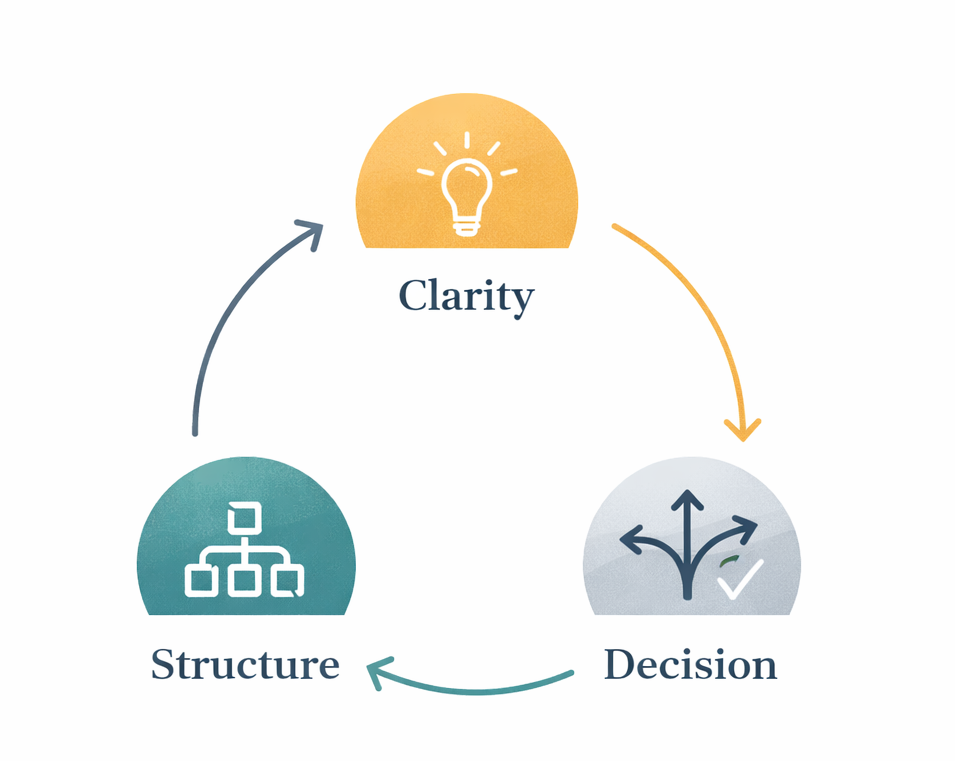
Strategy isn’t a performance or a document you admire from afar. It’s a decision-making tool designed to help you move forward with confidence instead of carrying the weight of the unknown.
How We Build Marketing Strategy at The McKnight Element
At The McKnight Element, strategy always comes before execution. Always. I don’t start with content calendars. I start with conversations.
We (you and I together) look at:
Customer patterns
Revenue behavior
Referral sources
Buying decisions
The types of clients you want more of, and the ones you don’t
Because once those decisions are clear, everything else gets easier.
You know what to say. You know where to show up. You know what to stop doing. Marketing stops feeling chaotic and starts feeling intentional.
When you speak to everyone, you speak to no one.
Do You Need a Marketing Strategy Consultant?
If you feel scattered, reactive, or unsure where to focus, you probably don’t need more content. You need clarity.
There are two ways we approach marketing strategy at The McKnight Element:
Strategic Consulting Session: For business owners who need immediate clarity and direction. One focused session. Clear decisions. Immediate next steps.
Strategic Planning Intensive: For founders ready to intentionally map out their next phase. A deeper dive. Structured priorities. A roadmap you can actually execute.
Marketing strategy should not be abstract. It’s structured decision-making that supports real growth.
And once those decisions are clear, your marketing stops feeling like pressure and starts feeling purposeful.